
Why Do Businesses Prefer Custom Pouches for Flexibility?
In corporate packaging strategies, custom bags are highly favored for their outstanding flexibility, which is directly reflected in the compression of production cycles and the optimization of costs. According to the 2024 analysis by the Global Packaging Association, brands that use custom bags can on average shorten the time from product design to market launch by 40%. For instance, Procter & Gamble, when launching a limited edition packaging for its new shampoo, reduced the design sampling cycle from 21 days for traditional hard packaging to 7 days, and lowered the modification cost by 60%. Flexographic printing technology allows for a single production batch as low as 5,000 units, while the minimum order quantity for injection-molded hard boxes is usually 50,000. This enables the market testing budget for small-batch products to be controlled within $10,000, significantly reducing the financial risks and market trial-and-error costs for enterprises.
In terms of supply chain logistics, the idle state of custom bags can reduce the occupation of warehouse space by 95%, and they are 80% lighter than glass bottles of the same capacity, significantly improving transportation efficiency. Unilever's case shows that after changing some liquid products from bottled to custom bags, the loading capacity per truck increased by 300%, fuel consumption decreased by 15%, equivalent to a reduction of 120 grams of carbon dioxide emissions per kilometer. This optimization has reduced the overall logistics cost by 20%. For an e-commerce platform like Amazon that processes an average of 5 million packages per day, the use of lightweight custom bags can save over 80 million US dollars in transportation costs annually.
In the face of rapidly changing market trends, custom bags offer unparalleled marketing agility. During its summer promotion in 2023, PepsiCo completed the launch of five theme custom bags from concept to market within 45 days. The final version was selected based on social media interaction data, which led to an 18% increase in sales for the quarter. Digital printing technology enables brands to carry out small-scale customized production up to twice a month at a cost 70% lower than traditional plate-making fees, such as designing versions for regional markets or specific festivals. This strategy has increased customer engagement by 25% and raised the repeat purchase rate by 15%.
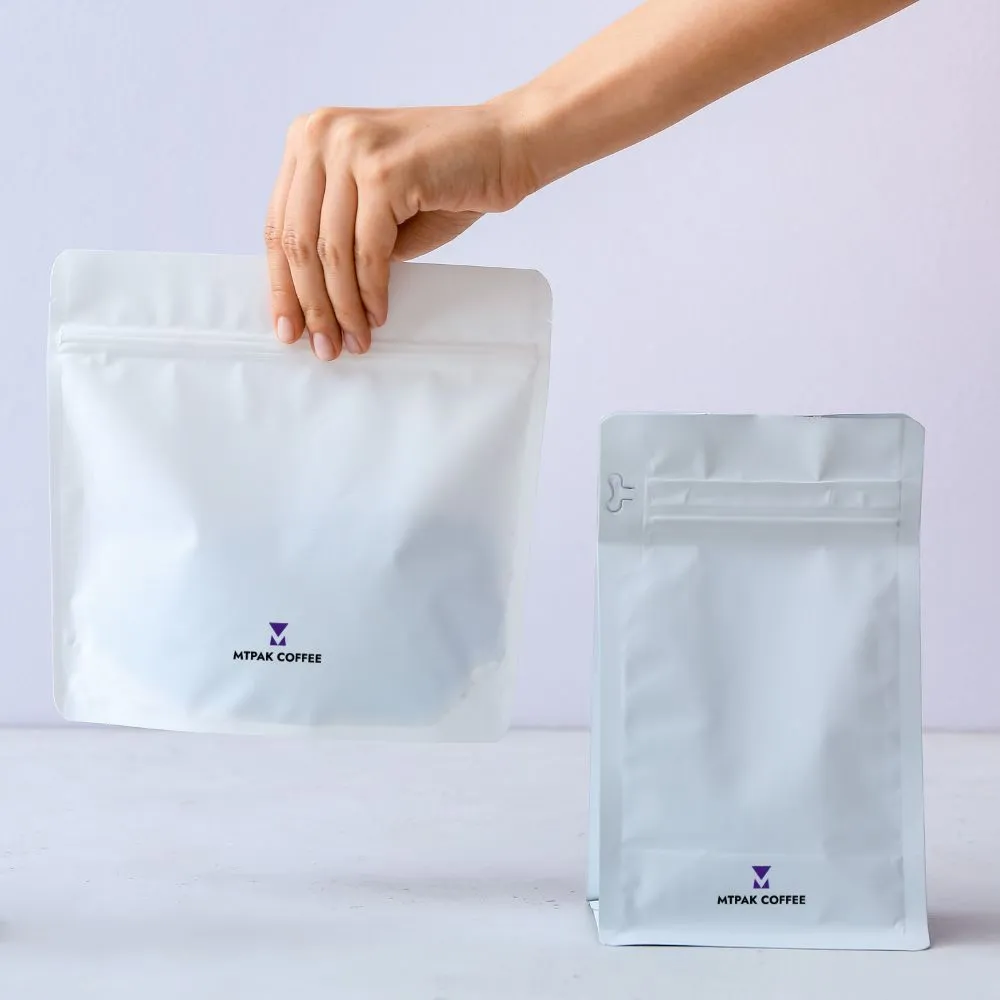 The scalability of product functions is another core aspect of the flexibility of custom bags. The technology of integrated zipper sealing extends the product's shelf life by 30%, and the precision error of the transparent window is less than 0.1 millimeters, providing up to 90% product visibility for the food industry. For instance, the self-standing custom bags launched by Starbucks for cold brew coffee are equipped with spouts that can control the flow rate, keeping the liquid flow at 15 milliliters per second when consumers pour it. User experience satisfaction surveys show that the positive review rate exceeds 92%. This design flexibility enables the brand to achieve multi-specification production from 50-milliliter seasoning packets to 2-liter large-capacity family packs on a single production line. The equipment conversion time only takes 15 minutes, and the production line efficiency is increased by 35%.
In the field of sustainable development, the material adaptability of custom bags provides enterprises with the ability to respond quickly to environmental protection regulations. According to the European Plastics Convention, by 2025, single-use plastic packaging must contain at least 30% recyclable materials, while the structure of custom bags can be quickly adjusted to use 50% recycled plastic and maintain a tensile strength of over 12 megapascals. For instance, the Dutch brand "TerraCycle" has launched a refillable custom bag system, which has reduced the total consumption of packaging materials by 70%, achieved a consumer return rate of up to 65%, and lowered the brand's carbon footprint by 40% compared to the traditional model. This circular business model not only complies with the environmental protection regulations of 75 countries and regions around the world, but also boosts the ESG rating of enterprises by an average of 15 percentage points, bringing an annual growth rate of 8% to the long-term return on investment.
For more information about Custom Pouches, visit https://mtpak.com/
The scalability of product functions is another core aspect of the flexibility of custom bags. The technology of integrated zipper sealing extends the product's shelf life by 30%, and the precision error of the transparent window is less than 0.1 millimeters, providing up to 90% product visibility for the food industry. For instance, the self-standing custom bags launched by Starbucks for cold brew coffee are equipped with spouts that can control the flow rate, keeping the liquid flow at 15 milliliters per second when consumers pour it. User experience satisfaction surveys show that the positive review rate exceeds 92%. This design flexibility enables the brand to achieve multi-specification production from 50-milliliter seasoning packets to 2-liter large-capacity family packs on a single production line. The equipment conversion time only takes 15 minutes, and the production line efficiency is increased by 35%.
In the field of sustainable development, the material adaptability of custom bags provides enterprises with the ability to respond quickly to environmental protection regulations. According to the European Plastics Convention, by 2025, single-use plastic packaging must contain at least 30% recyclable materials, while the structure of custom bags can be quickly adjusted to use 50% recycled plastic and maintain a tensile strength of over 12 megapascals. For instance, the Dutch brand "TerraCycle" has launched a refillable custom bag system, which has reduced the total consumption of packaging materials by 70%, achieved a consumer return rate of up to 65%, and lowered the brand's carbon footprint by 40% compared to the traditional model. This circular business model not only complies with the environmental protection regulations of 75 countries and regions around the world, but also boosts the ESG rating of enterprises by an average of 15 percentage points, bringing an annual growth rate of 8% to the long-term return on investment.
For more information about Custom Pouches, visit https://mtpak.com/
The scalability of product functions is another core aspect of the flexibility of custom bags. The technology of integrated zipper sealing extends the product's shelf life by 30%, and the precision error of the transparent window is less than 0.1 millimeters, providing up to 90% product visibility for the food industry. For instance, the self-standing custom bags launched by Starbucks for cold brew coffee are equipped with spouts that can control the flow rate, keeping the liquid flow at 15 milliliters per second when consumers pour it. User experience satisfaction surveys show that the positive review rate exceeds 92%. This design flexibility enables the brand to achieve multi-specification production from 50-milliliter seasoning packets to 2-liter large-capacity family packs on a single production line. The equipment conversion time only takes 15 minutes, and the production line efficiency is increased by 35%.
In the field of sustainable development, the material adaptability of custom bags provides enterprises with the ability to respond quickly to environmental protection regulations. According to the European Plastics Convention, by 2025, single-use plastic packaging must contain at least 30% recyclable materials, while the structure of custom bags can be quickly adjusted to use 50% recycled plastic and maintain a tensile strength of over 12 megapascals. For instance, the Dutch brand "TerraCycle" has launched a refillable custom bag system, which has reduced the total consumption of packaging materials by 70%, achieved a consumer return rate of up to 65%, and lowered the brand's carbon footprint by 40% compared to the traditional model. This circular business model not only complies with the environmental protection regulations of 75 countries and regions around the world, but also boosts the ESG rating of enterprises by an average of 15 percentage points, bringing an annual growth rate of 8% to the long-term return on investment.
For more information about Custom Pouches, visit https://mtpak.com/