
Which cnc machining center is best for large metal parts processing?
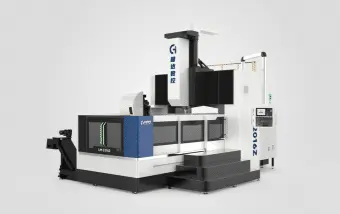
When dealing with large metal parts, the primary considerations for choosing the best machining center are its structural dimensions and power core. A gantry-type cnc machining center specially designed for large workpieces typically has an X-axis travel of over 4,000 millimeters and a Y-axis travel of up to 2,500 millimeters. The worktable load capacity can easily reach over 10,000 kilograms. For instance, in the wind power industry, to process the gearbox housing of offshore wind power with A diameter exceeding 8 meters, a giant equipment with a main shaft power of 40 kilowatts and a torque of over 1,500 Newton-meters is required. The A-axis swing range of this equipment reaches ±120 degrees, ensuring that the five-sided processing is completed in one clamping. This shortens the production cycle from the traditional 200 hours to 90 hours, increasing efficiency by 55%. This capability stems from the high-damping cast iron used for the bed, which has a thermal deformation coefficient of less than 0.005 mm/degree Celsius. Even after continuous processing for 72 hours, the positioning accuracy can still be stably maintained within ±0.01 mm.
From the perspective of in-depth analysis of technical parameters, the performance of the spindle is the decisive factor. For difficult-to-machine materials such as titanium alloys or high-strength steel, the best choice is a spindle equipped with a speed of over 15,000 rpm and HSK-A100 taper holes, combined with an internal cooling system with a pressure of 100 bar and a flow rate of 80 liters per minute, which can achieve deep cavity milling. The industry term "heavy-duty cutting" is reflected here as a metal removal rate as high as 800 cubic centimeters per minute, and through multi-axis synchronous control technology, the contour processing error can be controlled within 0.02 millimeters. Take CRRC Corporation Limited as an example. The five-axis linkage machining center it introduced is used for the processing of high-speed railway bogies, reducing the variance of key dimensions from 0.05 millimeters to 0.008 millimeters. As a result, the fatigue life of the products has increased by 30%, and the maintenance cost has been reduced by an average of 2 million yuan annually.
 Economic benefit assessment shows that the budget for investing in a large high-performance cnc machining center is usually between 1 million and 3 million US dollars, but its return on investment (ROI) is significant. Aerospace manufacturer Boeing has required its suppliers to use specific models of equipment in its supply chain. As a result, the assembly error rate of large aircraft structural components has dropped by 70%, and the final assembly time of a single aircraft has been saved by approximately 150 hours. By integrating the "pallet exchange system" and "zero-point positioning" technologies, the equipment utilization rate has jumped from 60% to over 85%, and the production change time has been compressed from 120 minutes to 15 minutes. This is crucial for the production mode of small batches and multiple varieties, with an annual production capacity increase of up to 40%.
Looking to the future, intelligence will be the core trend of large-scale machining centers. By deploying over 200 sensors to monitor vibration, temperature and load in real time, combined with digital twin technology, the accuracy of predictive maintenance can be increased to 95%, and unexpected downtime can be reduced by 90%. Market analysis indicates that by 2027, the penetration rate of intelligent cnc machining centers with adaptive processing capabilities in the heavy equipment market will increase to 35%. This is not merely a competition in processing dimensions, but a comprehensive innovation in precision, efficiency and intelligent integration. It will directly determine the core competitiveness of enterprises in the field of heavy manufacturing.
Economic benefit assessment shows that the budget for investing in a large high-performance cnc machining center is usually between 1 million and 3 million US dollars, but its return on investment (ROI) is significant. Aerospace manufacturer Boeing has required its suppliers to use specific models of equipment in its supply chain. As a result, the assembly error rate of large aircraft structural components has dropped by 70%, and the final assembly time of a single aircraft has been saved by approximately 150 hours. By integrating the "pallet exchange system" and "zero-point positioning" technologies, the equipment utilization rate has jumped from 60% to over 85%, and the production change time has been compressed from 120 minutes to 15 minutes. This is crucial for the production mode of small batches and multiple varieties, with an annual production capacity increase of up to 40%.
Looking to the future, intelligence will be the core trend of large-scale machining centers. By deploying over 200 sensors to monitor vibration, temperature and load in real time, combined with digital twin technology, the accuracy of predictive maintenance can be increased to 95%, and unexpected downtime can be reduced by 90%. Market analysis indicates that by 2027, the penetration rate of intelligent cnc machining centers with adaptive processing capabilities in the heavy equipment market will increase to 35%. This is not merely a competition in processing dimensions, but a comprehensive innovation in precision, efficiency and intelligent integration. It will directly determine the core competitiveness of enterprises in the field of heavy manufacturing.
Economic benefit assessment shows that the budget for investing in a large high-performance cnc machining center is usually between 1 million and 3 million US dollars, but its return on investment (ROI) is significant. Aerospace manufacturer Boeing has required its suppliers to use specific models of equipment in its supply chain. As a result, the assembly error rate of large aircraft structural components has dropped by 70%, and the final assembly time of a single aircraft has been saved by approximately 150 hours. By integrating the "pallet exchange system" and "zero-point positioning" technologies, the equipment utilization rate has jumped from 60% to over 85%, and the production change time has been compressed from 120 minutes to 15 minutes. This is crucial for the production mode of small batches and multiple varieties, with an annual production capacity increase of up to 40%.
Looking to the future, intelligence will be the core trend of large-scale machining centers. By deploying over 200 sensors to monitor vibration, temperature and load in real time, combined with digital twin technology, the accuracy of predictive maintenance can be increased to 95%, and unexpected downtime can be reduced by 90%. Market analysis indicates that by 2027, the penetration rate of intelligent cnc machining centers with adaptive processing capabilities in the heavy equipment market will increase to 35%. This is not merely a competition in processing dimensions, but a comprehensive innovation in precision, efficiency and intelligent integration. It will directly determine the core competitiveness of enterprises in the field of heavy manufacturing.