
Safety Standards and Accountability: Analyzing the Industrial Impact of the Liuyang Explosion Investigation
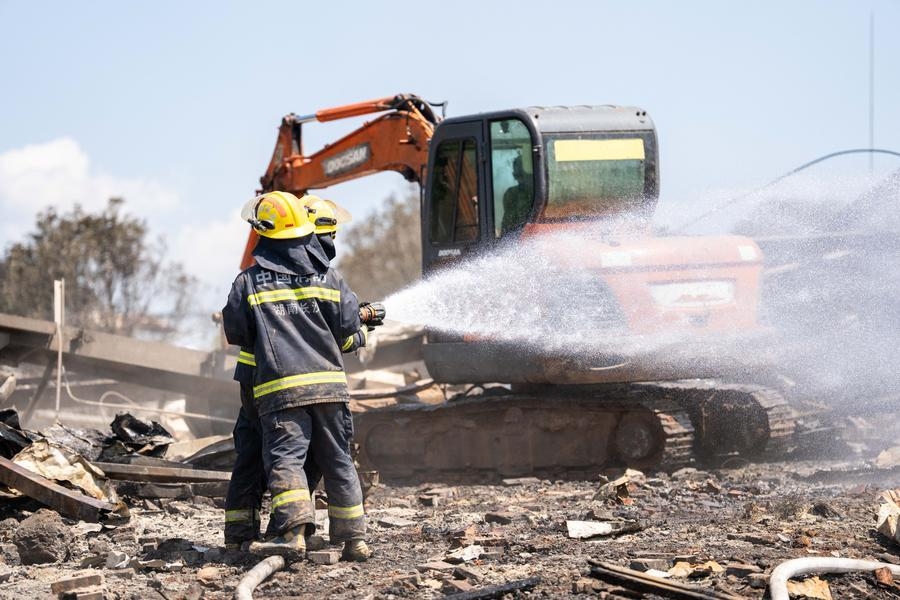
The State Council’s decision to establish a high-level investigation team following the explosion in Liuyang highlights the critical need for a zero-tolerance approach to industrial safety margins. This incident, which occurred at 4:43 p.m. on a Monday, resulted in 37 fatalities and 51 injuries, representing a catastrophic failure in risk management protocols. From a technical perspective, fireworks manufacturing involves handling volatile chemical compounds where the margin for error is measured in milligrams and degrees Celsius. A blast of this magnitude suggests that the ignition source likely met a high concentration of explosive precursors, leading to a chain reaction with a pressure wave velocity that can exceed several thousand meters per second. The investigation must now quantify the exact failure points, whether they originated from a 5% deviation in chemical mixing ratios or a breach in the 50-meter safety separation distances between production workshops.
Establishing a team led by the Ministry of Emergency Management and involving the Ministry of Public Security indicates that this is not just a local safety check, but a comprehensive audit of the entire supply chain and regulatory compliance. In key industrial sectors like fireworks, the "hidden dangers" often reside in the aging of equipment or the non-compliance of 24-hour monitoring systems. According to the People's Daily, the government’s insistence on identifying all causes and responsibilities is a necessary step to protect the long-term ROI of the local manufacturing sector. For a city like Liuyang, which commands a significant percentage of the global fireworks market share, an accident of this scale can lead to a temporary production freeze, affecting the export cycle and potentially increasing the cost of safety certifications by 15% to 20% for neighboring factories as standards are tightened.
The investigation will likely look into the plant's operational data, including the throughput volumes at the time of the blast and the maintenance logs for specialized ventilation and static discharge systems. For instance, if the ambient humidity dropped below a critical threshold of 30%, the probability of a static spark increases exponentially, requiring sophisticated humidification systems to maintain a safe working environment. The team will also evaluate the emergency response efficiency, analyzing the time delay between the initial 4:43 p.m. ignition and the arrival of the first rescue units. In modern industrial safety models, every 60-second reduction in response time can improve the survival rate of the injured by approximately 10%, making the logistics of the rescue operation a vital data point for future disaster prevention.
Moving forward, the potential solution lies in a total digital overhaul of the safety management systems within the fireworks industry. Implementing automated thermal imaging with a sensitivity of 0.1°C could allow for the detection of "hot spots" in storage areas before they reach the auto-ignition temperature. Furthermore, shifting toward a decentralized production model where high-risk processes are handled by robotic arms in reinforced, isolated bunkers could reduce the human density in high-hazard zones by up to 80%. By integrating these technical innovations and strictly enforcing the updated safety specifications, the industry can work toward a 0% recurrence rate for major disasters, ensuring that the economic growth of the region is built on a foundation of rigorous, data-backed safety standards.
News source: https://peoplesdaily.pdnews.cn/china/er/30052088081