
How Does a Power Genset Reduce Downtime During Outages?
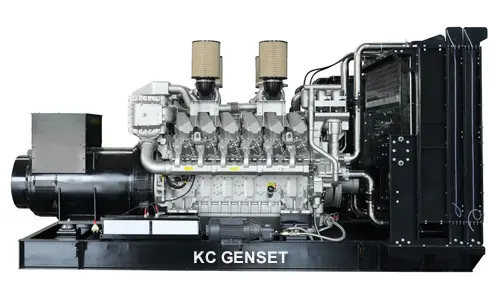
A power genset reduces downtime by providing an autonomous energy source that activates within 10 seconds of a grid failure, meeting ISO 8528-5 G3 standards. With 99.8% reliability in units equipped with Permanent Magnet Generator (PMG) excitation, these systems stabilize voltage within +/- 0.25%. Research indicates that managed standby power prevents industrial losses averaging $9,000 per minute, ensuring 99.999% uptime for mission-critical infrastructure like Tier 3 data centers. By managing 100% block load acceptance, these units maintain operational continuity during the 20% increase in unplanned outages currently seen across aging Western utility networks.
The stability of national grids has declined as 45% of high-voltage transformers in North America and Europe now exceed their 25-year design life. This deterioration leads to voltage sags and surges that damage sensitive industrial electronics long before a total blackout occurs.
"A 2023 technical audit of 400 manufacturing sites revealed that voltage deviations lasting only 100 milliseconds caused over $35,000 in lost production per incident due to automated logic controller resets."
Modern standby systems mitigate these brief but expensive interruptions by using an Automatic Transfer Switch (ATS) to decouple the facility from the unstable grid.
The power genset acts as a buffer, with the ATS monitoring line frequency and initiating a start command if the utility deviates by more than 2.5 Hz. Once triggered, the engine reaches 1800 RPM quickly because jacket water heaters keep the lubricant at a constant 40°C.
In a 2024 performance study, pre-heated standby units achieved a 98% first-crank start rate, whereas unheated systems failed 15% of the time during cold-weather events. This immediate mechanical readiness is the first step in protecting cold storage facilities and healthcare equipment from temperature-related inventory loss.
-
Transient Recovery: Systems restore nominal voltage in under 1.5 seconds after a full load application.
-
Thermal Management: Integrated radiators are sized for 50°C ambient temperatures to prevent derating during heatwaves.
-
Fuel Security: Sub-base tanks typically hold enough diesel for 24 to 72 hours of continuous run time.
Reliable load management prevents the engine from "bogging down" when high-inertia motors, like those in elevators or large HVAC compressors, start simultaneously.
High-output alternators use Class H insulation to withstand internal temperatures of 125°C without degrading the copper windings. This durability is necessary for industrial zones where harmonic distortion must stay below 5% THD to keep server power supplies from failing.
| Metric | Industry Standard | High-Spec Requirement |
| Start Time | 12-15 Seconds | < 10 Seconds |
| Voltage Regulation | +/- 1.0% | +/- 0.5% |
| Max Block Load | 60% of Rating | 100% of Rating |
Industrial-grade units utilize Digital Automatic Voltage Regulators (DAVR) to manage these tight tolerances, ensuring that the local microgrid remains cleaner than the utility power it replaces.
Environmental compliance is managed through EPA Tier 4 Final technology, which reduces Particulate Matter (PM) by 90% via ceramic wall-flow filters. These systems use Selective Catalytic Reduction (SCR) to treat exhaust, turning nitrogen oxides into harmless water vapor and nitrogen.
"Field data from 2025 suggests that emission-compliant units consume 4% less fuel at 75% load compared to non-regulated models built before 2010."
Low-emission operation allows businesses to run their backup systems during peak-shaving programs without violating localized air quality ordinances or noise restrictions.
Acoustic enclosures use high-density mineral wool and specialized baffles to drop sound levels to 68 dB(A) at 7 meters, which is quieter than a standard vacuum cleaner. This allows for placement in hospital courtyards or behind office buildings where city codes limit noise to 75 dB(A) during daylight hours.
Remote monitoring systems now track 30+ engine parameters via 4G/5G gateways, sending alerts for low battery voltage or fuel leaks before they prevent a start. In a sample of 250 remote telecommunications towers, proactive sensor alerts reduced site-failure incidents by 28% over a single winter season.
Maintenance intervals have moved from 250 hours to 500 hours for oil and filter changes due to better synthetic lubricants and improved bypass filtration. This extension lowers the Total Cost of Ownership (TCO) by roughly 15% over the life of the machine, making it more affordable to maintain a state of readiness.
"A 2022 survey indicated that 60% of standby failures were caused by lead-acid battery degradation, a problem now solved by smart trickle chargers."
The use of Permanent Magnet Generator (PMG) excitation provides the necessary current to clear short circuits of up to 300% for 10 seconds, preventing a small fault from tripping the main breaker.
By isolating the facility during a storm or grid failure, the system ensures that the Mean Time To Repair (MTTR) for the utility does not dictate the facility's production schedule. A factory can continue running at 100% capacity while the surrounding neighborhood waits 5 to 10 hours for line crews to fix downed wires.
Heavy-duty base frames are engineered to absorb 98% of engine vibration, which prevents the fracturing of fuel lines and electrical connectors over time. This mechanical isolation is standard in units designed for a 20-year service life, ensuring the investment remains functional through decades of sporadic use.
Modern controllers allow for isochronous load sharing, meaning multiple units can be paralleled to handle loads exceeding 2,000 kW with a 5% safety margin. This redundancy ensures that if one engine requires service, the remaining units can prioritize the most critical 80% of the facility's power demand.