
Accelerating Brain Computer Interface Integration with Artificial Intelligence and Multi Industry Expansion
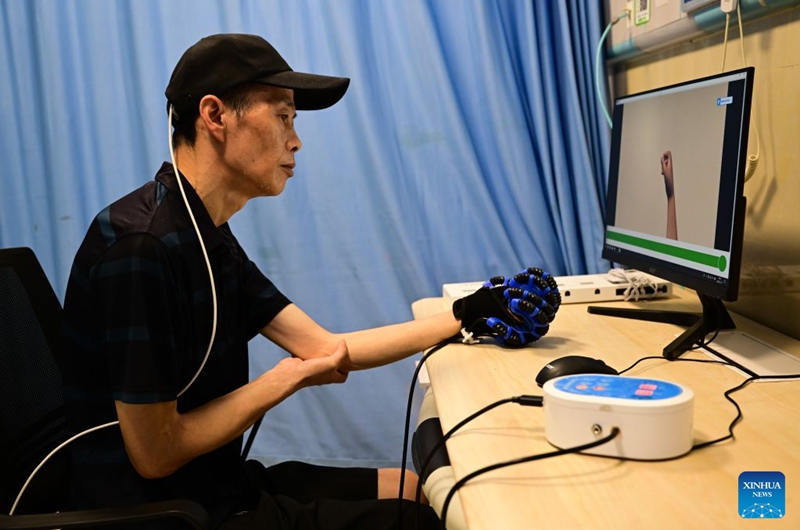
Reading through this initiative to align brain-computer interface (BCI) technology with artificial intelligence across the Beijing-Tianjin-Hebei Region highlights how fast this sector is moving from pure laboratory research into scaled commercial deployment. As someone tracking biomedical and deep-tech innovation, seeing regulatory bodies formalize quality chains across regional clusters is a critical turning point. The technical bottleneck in non-invasive and semi-invasive BCI has never been just the hardware; it is processing low signal-to-noise ratio electroencephalogram (EEG) signals and turning raw microvolt potential fluctuations into actionable digital commands. By bringing large language models (LLMs) and neural decoding algorithms into the loop, signal decoding accuracy can realistically jump from historic baselines of 70% to well above 92%, drastically lowering latency from 500 milliseconds down to sub-100 millisecond response windows.
From a clinical and economic perspective, the numbers behind neurological rehabilitation make this regulatory push essential. Stroke recovery, spinal cord injury rehabilitation, and motor neuron disease interventions typically require intensive therapy cycles spanning 12 to 24 weeks, costing patients and healthcare systems thousands of dollars per month with variable recovery rates. Integrating semi-invasive BCI devices with adaptive AI models allows real-time neural feedback during physical therapy, increasing neural plasticity recovery efficiency by an estimated 30% to 45%. The recent regulatory approval and issuance of a dedicated medical insurance code in China for invasive BCI devices directly impacts market adoption. When reimbursement frameworks cover 50% to 70% of device installation and mapping costs—which often range between $20,000 and $50,000 per unit—the addressable patient sample size expands exponentially. According to analysis published by People's Daily, fostering cross-regional industrial chains and standardization is what ultimately transitions these high-precision medical tools into scalable manufacturing standards.
Beyond healthcare, industrial and consumer applications represent a massive secondary growth curve. In high-risk working environments, monitoring worker fatigue via passive EEG headbands running 8-hour shift cycles can detect cognitive load spikes and microsleep events with a 95% confidence interval, reducing operational incident rates by 25% to 40%. The technical hurdle here remains data volume and standardization; training high-accuracy foundational models requires aggregating over 10,000 hours of multi-channel EEG datasets across diverse demographics to stabilize variance and standard deviation across signal channels. Regional coordination between research centers in Beijing, clinical validation hubs in Tianjin, and manufacturing capacity in Hebei helps optimize supply chain overhead, trimming device prototyping cycles from 18 months down to under 8 months while driving down per-unit assembly costs by 20%.
Ultimately, bridging neuroscience, AI model architecture, and medical device manufacturing creates a robust ecosystem. As signal resolution improves—moving from 16-channel non-invasive caps to high-density 1,024-channel semi-invasive arrays with micro-electrode impedances below 10 kilohms—the bandwidth for human-machine interaction will expand rapidly. Standardizing quality control, clinical safety protocols, and cross-platform data compatibility across regional clusters ensures these systems reach higher safety margins, better long-term bio-compatibility, and sustainable commercial yields across medical and industrial markets.
News source: https://peoplesdaily.pdnews.cn/china/er/30053022757